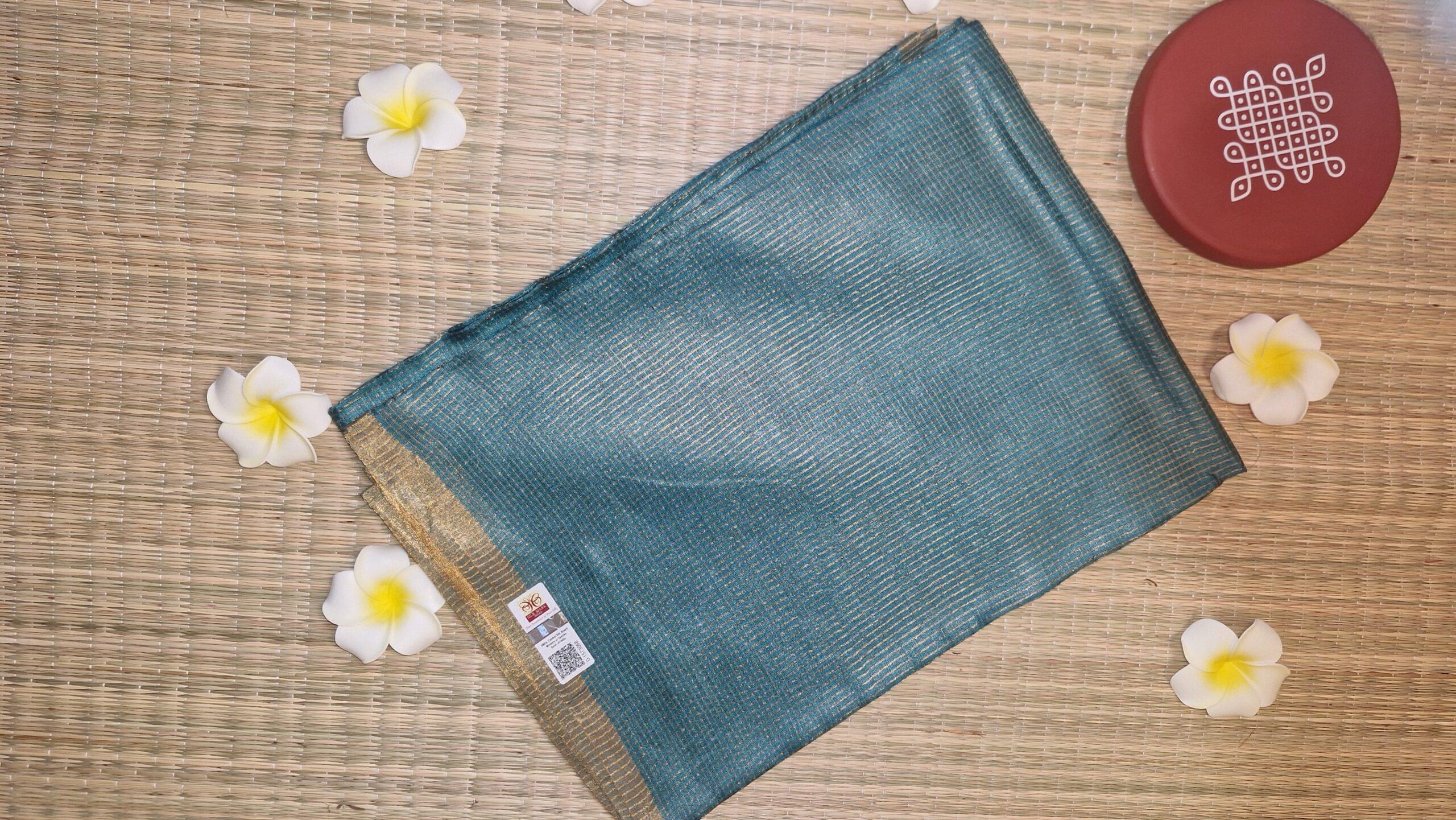
Design Details:
- Fabric: Pure Kosa (Tussar) Silk
- Border: Fine small zari border for a subtle, elegant edge
- Body: All-over zari checks – understated yet festive
- Pallu: Richly woven zari pallu that adds a statement finish
- Blouse: Includes matching unstitched blouse piece with zari detailing
- Length: 6.3 meters (including blouse piece)
- Certification: Silk Mark Certified – Guaranteed purity and quality
Perfect For:
- Festive Office Days – Diwali, Puja, or celebrations at work
- Cultural Events – Where tradition and elegance are a must
- Family Gatherings – Subtle glam with sophisticated charm
- Gifting – For women who love heritage and style
Why You’ll Love It:
- Luxurious feel, breathable comfort
- Festive yet formal — perfect for working women
- A piece of India’s rich handloom heritage
- Certified authenticity with Silk Mark label
All About Tussar Silk – Nature’s Golden Thread
🌿 What is Tussar Silk?
Tussar Silk, also spelled as Tasar, is a type of wild silk known for its natural gold sheen, rich texture, and unique charm. Unlike the more lustrous mulberry silk, Tussar has a more earthy, raw, and organic feel, making it a favorite for those who appreciate natural elegance and traditional weaves.
It is often referred to as “Kosa Silk” in Chhattisgarh, where it holds deep cultural and economic importance.
🧵 Where Does It Come From?
Tussar silk is primarily produced in the eastern and central parts of India, including:
- Chhattisgarh (Kosa Silk)
- Jharkhand
- Odisha
- West Bengal
- Maharashtra
It is woven by tribal communities who have passed down their skills over generations, particularly the Santhal, Bhil, and Munda tribes.
How is Tussar Silk Made?
The making of Tussar Silk is a blend of nature, tradition, and craftsmanship:
- The Silk Moth (Antheraea mylitta)
Unlike regular mulberry silk, Tussar is produced from wild silkworms that live in natural forests and feed on trees like Arjun, Sal, and Asan. These silkworms create cocoons with a copper-golden hue. - Harvesting the Cocoons
After the moths leave the cocoons, the empty shells are collected — a process that makes Tussar silk often non-violent (Ahimsa silk). In some cases, the silk is harvested before the moth exits, depending on the type of silk being produced. - Reeling the Silk
The cocoons are soaked in hot water to soften the filament, and then the silk is carefully reeled by hand or using traditional charkhas (spinning wheels). Tussar threads are shorter and coarser than mulberry silk, giving it a distinct texture. - Dyeing and Weaving
The silk is dyed using natural or AZO-free dyes, and then woven on handlooms by master weavers. The weaving often includes zari borders, motifs, or textured patterns unique to each region.
✨ What Makes Tussar Silk Special?
- Natural Golden Sheen – Its signature glow makes it instantly elegant
- Breathable and Lightweight – Ideal for warm climates and all-day wear
- Rich Texture – Gives it a rustic and artisanal feel
- Eco-Friendly – Often produced in forested, tribal areas with minimal processing
- Supports Livelihoods – Empowers tribal communities and preserves traditional skills
🌸 Tussar Silk is More Than Fabric — It’s a Cultural Legacy
In every thread of Tussar, you’ll find a story of:
- Nature and sustainability
- Tribal pride and craftsmanship
- Indian heritage and timeless beauty
Whether worn at work, for festive occasions, or simply to feel connected to something real — Tussar Silk lets you wear your roots with grace.

Reviews
There are no reviews yet.